Delenda Est Carthago

Why not delve into a twisted mind? Thoughts on the world, history, politics, entertainment, comics, and why all shall call me master!

Name:
Location: Mesa, Arizona, United States

I plan on being the supreme dictator of the country, if not the world. Therefore, you might want to stay on my good side. Just a hint: ABBA rules!

1.9.09

What I've been reading

Easy Riders, Raging Bulls: How the Sex-Drugs-and-Rock 'N' Roll Generation Saved Hollywood by Peter Biskind. 1998, Simon and Schuster, 506 pages.

I'm not sure if I've mentioned before how much I like not only the thing, but how the thing is made, and therefore I love reading books about how, say, movies are made almost as much as the movie itself. So I was jazzed to read this book, which is about the seismic shift in Hollywood from the late 1960s to the late 1970s. In that decade, a slew of new directors changed the way movies were made and how they were perceived. Biskind's book is pretty fascinating, and it's amazing that it's so, mainly because I hated pretty much everyone in this book. Yes, hated!

It's not surprising to anyone that creative types in a highly competitive business are often evil, but it's strange that every creative type in this book, with one exception, comes off as a complete scumbag. That one exception is Steven Spielberg, and from what the people in the book say, that might be because he's not a true "artiste." But we'll get back to that! (I should point out that a lot of the women come off pretty well, but that might be because this time period was still notable for its sexism, despite the women's movement.)

Biskind begins in the mid-1960s, when Hollywood had become a bit staid and conservative and moviegoers were abandoning theaters in droves. Television had taken a huge chunk out of their audience, and the owners of the movie companies, all old men, some of whom from the earliest days of Hollywood, no longer had any idea how to connect to the younger audiences. Into this mess came a bunch of directors and producers (and, to a lesser extent, writers and actors) who had been influenced by French New Wave and even Americans like Orson Welles (who became, in the 1970s, a patron saint of these men, who loathed how he had been treated by Hollywood) and wanted to make movies in that vein for an American audience. Biskind begins with Bonnie and Clyde, which shattered the perceptions of what a gangster movie could be and made Warren Beatty one of the most powerful men in Hollywood. He follows that up with Dennis Hopper's Easy Riders, which made a boatload of money and pointed the way to low-budget movies that connected with the hippie generation. By the end of the 1960s, the New Hollywood was off and running and ready for the 1970s, one of the most creative eras in moviemaking ever.

Biskind tells the story in a sprawling thematic fashion, focusing on certain movies and individual directors, jumping back and forth in time to cover what he sees as the major signpost movies along the way. He covers the ones you'd expect - The Godfathers, Apocalypse Now, The French Connection, The Exorcist, The Last Picture Show, Mean Streets, Taxi Driver, Five Easy Pieces, M*A*S*H - and some you might not expect, such as those of Lucas and Spielberg. The book is really about the directors, as the 1970s were their Golden Age, so he gives us good character sketches of Hopper, Robert Altman, Bob Rafelson, Francis Ford Coppola, William Friedkin, Paul Schrader, Hal Ashby (whose death he sees as the symbolic end of the era), Peter Bogdanovich, Martin Scorsese, George Lucas, and Spielberg. He gets into the directors' battles over creative control with the heads of the studios, who had never been challenged before. As their movies made money, the directors were able to gain more and reach higher, and Biskind's prose is thrilling as he discusses this. It's astonishing that he makes the dirty business of making movies (I mean, come on, they're only movies) sound so noble.

Of course, this is a "rise and fall" story, so the directors overreach, as many of them began to believe that they could write and produce, cutting everyone out of the process. As more than a few observers point out, very few of them were true "auteurs," so they couldn't write a good script or produce a good movie, and when they started alienating everyone who could, they turned out horrible movies. It's interesting that one of the few American "auteurs," Woody Allen, gets barely a mention in this book (and that to point out that he was, in fact, an auteur), perhaps because he was able to make the kinds of movies that these complicated directors wanted to make, and therefore wasn't as interesting. One of the weaknesses of the book is that Biskind tends to ignore a lot of movies that were important in the 1970s (A Clockwork Orange comes to mind), but if we recognize that he's not necessarily writing a history of the movies but a history of a group of directors who, to one degree or another, self-destructed like Icarus, it becomes less egregious. As the directors spiral out of control, Biskind does a good job getting all the dirt on them (he notes when people disagree on facts, but it happens surprisingly little) and showing how horrible they really were. Hopper is insane, Coppola is megalomaniacal, Scorsese is paranoid, Bogdanovich is vain, Friedkin is mean, and they're all doing copious amounts of drugs that don't help. It seems that very few of them made great movies after they became powerful, and only when they were brought low could they reinvent themselves. Some, like Bogdanovich (and, to a lesser extent, Coppola), never recovered. Some, like Scorsese, recovered almost in spite of themselves. Biskind writes this as a Greek tragedy, which is fine, but because there are almost no likable characters, it's hard to care all that much. Biskind, along with his subjects, seem to have an elevated idea of what movies mean, and although I love movies, I recognize that there might - just might - be more important things in the world. These directors, it seems, took far too long to figure that out.

Perhaps that's why Spielberg, and to a lesser extent Lucas, come off relatively well in the book. Lucas is, like every other director in the book, a control freak, but he takes it to a new level. Biskind seems to share the other directors' dismissive attitude toward Lucas, but he's the only one who created an independent entity that was able to be profitable and compete with the major studios. Of course, capturing the zeitgeist with Star Wars helped, but it was only with the success of The Empire Strikes Back was Lucas able to strike out totally on his own. But Lucas still comes off a bit like the emperor in the Star Wars saga - hiding out in the shadows, cloaked in mystery, slowly retreating more and more from the world. Spielberg, on the other hand, seems to be the only one who recognizes what movies are, and even though he cheat on Amy Irving, she's so mean to him you almost can't blame him. Spielberg is also held up to scorn by the subjects of the book, but he's also the only one who seemed to escape a major flop (1941) almost unscathed. There's a nice undertone of jealousy throughout the book whenever Lucas and Spielberg come up, both by the author and by the subjects. It makes the book a bit more interesting.

Ultimately, Biskind is a bit too in love with the decade, but at least he wears his heart on his sleeve. Yes, a lot of the movies of the Eighties were soulless corporate products, but perhaps that's because the directors of the Seventies screwed up so badly. They allowed their budgets to bloat so that their movies weren't profitable anymore, and so big-budget directors who could deliver as many dollars as possible came into vogue. The directors became so obsessed with power that they shut down producers, writers, and even actors occasionally, so the studio heads began to see less of those people too and began looking for the big explosion instead of the major star. Biskind never addresses that perhaps it wasn't only Spielberg's genius of reading the audience that changed the movies, but also the the egos of the directors. That's really the tragedy of this book - that talented people were allowed to run riot and destroyed a system without really replacing it with anything. After a decade of rule, the directors ate themselves and the studios just moved back in. Coppola wanted to create an alternative studio, Lucas sort of did, but nobody seemed to have a plan about what to do once they stormed the gates. They looked around, saw all the loot, and just started seizing it for themselves. Biskind's book is a fascinating portrait of this crazy time, and it's worth checking out for all the behind-the-scenes stuff about the movies and the lives of these men, who drank, smoked, and snorted anything they could get their hands on, blithely cheated on women who had supported them, and went a bit nuts when they got the keys to the kingdom. It's a gripping read, and I'd like to check out the other books that Biskind has written about the movie industry.

Labels: , , ,

21.7.09

What I've been reading

The Catastrophist by Ronan Bennett. 1997, Simon & Schuster, 333 pages.

This novel is strange. It's not strange in a Joycean way, because it's very straightforward, but it's strange because it doesn't seem that Bennett knows what he wants to do with it. It is a story of a cynical novelist who travels to the Belgian Congo in 1959, just on the cusp of independence, to be with the woman he loves, a fiery, idealistic journalist. Anyone who knows the slightest bit about the transfer of power in the Congo from the Belgians to the Congolese knows that Patrice Lumumba, who was the first prime minister, was deposed in a coup ten weeks after taking power and a few months later killed (probably with the Americans' blessing). Lumumba has become a mythic figure in the history of anti-colonialism and African independence, and he haunts this book as well, although he's not in it that much.

Bennett gives us an interesting pair in James Gillespie and Inès Sabiani, the book's star-crossed lovers. James is older (by thirteen years) and much more jaded than Inès, who believes in completely biased journalism (she's a communist) while James tries to see all sides of a story. James finds his relationship threatened by the volatile situation in the Congo, which is bad and getting worse, but which offers Inès a chance to get involved in the way she loves and the way James hates. The book is really about how their affair disintegrates as James realizes that a simple love affair will never be as important to Inès as grand ideas on the world stage. She leaves him, but he can never stop loving her. That, of course, becomes a problem.

The difficulty with this book is that we know exactly where it's going, and while that's not always the point, as a thriller, it doesn't deliver, and as a love story, it's a bit lacking (for different reasons). The reviews compare it to, most commonly, a Graham Greene novel, but the crucial difference is that it's written with almost 40 years' hindsight, so while Greene's novels have a sense of not knowing exactly who's who and who's the bad guy, this novel can examine the legacy of the early independence movement and buy into the Lumumba fantasy more than a contemporary novel might (or might not, of course). We know how the Congo spiraled out of control fairly quickly (and this book was written in 1997, prior to the latest round of violence in the eastern part of the country), so Bennett can subtly indicate that the involvement of the United States (personified by Mark Stipe, a CIA agent who befriends Gillespie) was part of what caused the country to fall apart. It makes this slightly more a propaganda piece than a true thriller, because Bennett is guiding us toward an anti-Belgian, anti-American viewpoint based on the future history of the country, which a contemporary author might not do. (I'm not, I should stress, saying that Bennett believes this viewpoint or, if he does, that it's a bad viewpoint to have. It's apparently fairly clear that the CIA was, if not complicit, at least aware that Lumumba's enemies were going to slaughter him, so it's not as if writing with an anti-American tone is that offensive. I'm just pointing out that it's fairly obvious, and it's mostly because Bennett "knows how it all turns out.")

As a love story, it falls apart even more quickly, because the affair is falling apart at the beginning of the book, and Bennett never quite convinces us that James and Inès had the affair of the century, so its dissolution isn't as powerful (although Bennett's writing when describing the fractured affair is very good; the best in the book). Bennett doesn't quite earn the tragedy of James and Inès, because we don't really believe that James could be so beguiled in the first place, so why is he so addicted to Inès? It's crucial that we believe it, because it's the hinge on which Gillespie's final actions rotate. James becomes much more pathetic as the book continues, because despite Inès telling him early in their relationship that she loved him, it's hard to believe from her actions. So when she breaks his heart, it feels like he should have gotten over it. Come on, Gillespie!

In the end, his love clashes with his lack of belief in, well, anything. If you've ever seen Casablanca or The Third Man, you know that the cynic grows a conscience and helps the person who needs his help. What's interesting is that Bennett makes it clear that James does this (yes, he can't escape the conscience!) not for noble reasons, like Rick Blaine, but because of his love for Inès - he's convinced that she'll come back to him if he doesn't cave to the authorities. The problem with this goes back to the unconvincing way Bennett gives us the affair. James is conflicted because he's unsure if Inès will come back to him or not, but we as the reader are sure she won't, because she's never given any reasons that James is anything else but a momentary stop on her way between one revolution and the next. Therefore, his sacrifice is meaningless, and his loss of cynicism, even for a moment, rings false. It's frustrating.

Bennett writes very well, and he really does a fine job creating these characters - perhaps too well, because then he can't fit these two people together. The politics of the book, in fact, are quite well done, as we get a good sense of what it was like in the Congo in 1959-60. I'm fascinated by the independence movement in Africa, and while Bennett changes the time frame so that it's not a very good historical document, he does a good job showing us the effect the independence movement had on both the whites and the natives, as for many Europeans, they considered Africa their home and couldn't imagine the violence that accompanied many independence movements. Bennett does a good job with that, and when that takes center stage, the book is often gripping.

The Catastrophist is a difficult book to recommend, because while there's a lot of good writing and some good ideas in the book, the central relationship is poorly done and therefore affects much of the rest of it. It's an easy book to read and it's an interesting look at a volatile period of history, but it also falls short in a lot of places. But it also shows why Krys and I call some incidents "Lumumba moments!"

Labels: , , , ,

7.7.09

What I've been reading

For the Thrill of It: Leopold, Loeb, and the Murder That Shocked Jazz Age Chicago by Simon Baatz. 2008, Harper Perennial, 541 pages.

Most of us, I would presume, have heard of Nathan Leopold and Richard Loeb, at least in conjunction with the films made of their exploits, from Alfred Hitchcock's Rope (with Jimmy Stewart) to Richard Fleischer's Compulsion (with Orson Welles and E. G. Marshall and, weirdly enough, Gavin McLeod) or even to Tom Kalin's Swoon, which is the only movie of the three I've seen (although I'd like to see the others). The story of Leopold and Loeb is so very weird that it fascinates us, even 85 years later. It's one of those crimes that continues to defy explanation, which is probably why it remains interesting to study.

Baatz writes in his book that no one prior to this has written a book on the case, which seems odd. But here this one is, and in the best tradition of popular history, it's a well researched and erudite yet gripping read, mainly because of the subject matter. Baatz gets a bit turgid when dealing with the courtroom scenes, but when he writes about Leopold and Loeb's relationship and the days leading up to and following the murder, the book races along in an almost fictional style. Similarly, once Leopold and Loeb actually go to jail, Baatz does a good job writing about their lives (in Loeb's case, a short one). The trial section isn't bad, but it does drag a bit due to all the back-and-forth legal maneuverings of the two sides.

Leopold and Loeb are a fascinating pair, of course, because it's doubtful either one of them would have pulled off such a horrible crime (murdering a 15-year-old boy for no motive) without the other. Leopold was a shy, extremely intelligent young man who fell in love with Loeb and had an active fantasy life wherein he was the slave of a great king who came to depend on the slave and always offered him his freedom, which the slave refused. Loeb, meanwhile, who was more outgoing and less intelligent than Leopold, dreamed of being the perfect criminal. The two boys complemented each other, as Loeb kept Leopold on the hook by promising sex if he (Leopold) would help in his (Loeb's) crimes - the two worked their way up to murder over the course of a few years - while Leopold allowed Loeb to call the shots while making himself indispensable to Loeb, in much the same way his fantasy slave becomes indispensable to the king. Both boys were from rich families, and both boys had odd relationships with their nannies when they were young - Leopold's seduced him when he was twelve, while Loeb's pushed him to graduate early from high school and enter college before he was ready - it becomes obvious early on that both boys were cauldrons of psychoses that came bubbling out when they met each other and enabled each other's desires.

Baatz goes over the crime in great detail (most of which was provided by Loeb and Leopold themselves) and the trial in even greater detail. Clarence Darrow was the lead attorney (technically he was Loeb's lawyer), which of course sensationalized the case even more, and Robert Crowe, the DA, had his eye on future political office and a reputation as someone who always got the death penalty, even in cases where the defendant pleaded guilty by reason of insanity. The actual trial wasn't even really a trial - Darrow pleaded guilty to avoid a jury trial, but then persuaded the judge to hear arguments by both sides on the degree of mental illness suffered by the boys - not insanity, Darrow argued, but a different kind of mental illness. This allowed him to avoid the jury and essentially place the burden on the judge to determine the sentence, and if he found that Leopold and Loeb suffered from any kind of mental illness, they wouldn't receive the death penalty. Crowe thought the defense was a perversion of justice, but the judge allowed it, and that's what the trial became. By "winning," Darrow got the boys life sentences. Loeb was killed in prison, but Leopold was eventually paroled.

Baatz also does a good job placing the crime in the context of 1920s America. It's interesting reading the contrasting attitudes displayed by the police and members of the press about, say, the boys' sex acts. On the one hand, there's the expected talk about "perversion" and mental deficiencies, but there's also a kind of casual understanding that these things go on and that's just the way life is. Baatz subtly makes the point that, this being the Twenties, boys just experimented with these sorts of things. We also get the usual denunciations of the decadent lifestyles of the young from pulpits across the country, as preachers raged against the anti-religious attitude sweeping the nation (it never ends, does it?). Baatz points out how at least one minister preached a sermon explaining how the death penalty is completely congruent with Christian values. There's a lot of this kind of social context in the book, as the case captured the imagination of the entire country.

For the Thrill of It is an interesting book about a dazzling time in American history and its dark underbelly. Leopold and Loeb were, it seemed, paragons of what American youth could be - they were both intelligent, good-looking, rich, and had bright futures. They didn't have great family lives, it became clear, but neither were they from broken homes. Underneath it all, of course, were dark currents just waiting to be released, and the most interesting part of the book is, as I mentioned, that neither could have done this without the other. The one place the book fails is at conclusively stating why Leopold and Loeb killed a boy. This failure isn't Baatz's, though. Leopold and Loeb themselves could never really provide a conclusive answer to that question. No wonder the crime continues to vex us even today!

Labels: , , , , ,

21.6.09

What I've been reading

The Battle for Spain: The Spanish Civil War 1936-1939 by Antony Beevor. 1982/2006, Penguin Books, 526 pages.

It took me a long time to read this book, not because it was bad, but because I had just zipped through a bunch of shorter and, frankly, less challenging books and I needed to get back into full-on historical reading mode. Plus, we went to Disneyland for a week, so I didn't do much reading. But I finally got through it, and while I didn't love it, Beevor does a nice job sorting through the morass that was the Spanish Civil War.

Most of us, I would surmise, don't know much about the war. We know about the bad guys (the fascists, who should be more correctly called the nationalists), the good guys (the republicans), the fact that the Nazis used is as a training ground for their weapons, that Pablo Picasso painted a masterpiece depicting the destruction of Guernica, and that many literary luminaries, such as Ernest Hemingway and George Orwell, fought or worked for the republican side. That is, if we even know that. I knew all that but not much else, so I figured it was time to learn more!

Beevor is certainly exhaustive in his research. This book was originally published in 1982, but years later, Beevor went back, looked at newly available archives, and reworked the book. It's an extremely thorough examination of the war, which is nice to see. Beevor doesn't focus on one side over the other, as he does a fine job getting inside both the nationalist and republican governments. He goes back to the nineteenth century to explain the context of the sides, especially the Carlists, who traced their origins back to the 1830s. He spends as much time with the society and culture of the opposing sides as he does with the actual war, which helps us understand why the nationalists were able to triumph beyond just the fact that they were militarily superior to the republicans. The nationalists probably would have won the war anyway, but Beevor does a good job showing that the republican government didn't do their fighting forces any favors.

Beevor's sympathy lies with the republicans, but what's nice about the book is that he never shies from showing the dark side of the Spanish democracy. It's easy to believe the atrocities committed by the nationalists - we're conditioned to believe that about fascists, after all, and General Franco was allied with Hitler, after all - but Beevor does a good job delving into the terror perpetuated by the republican side. The republicans were an odd melange of communists, anarchists, Marxists, and Basque and Catalan separatists, which were occasionally right-wing and therefore had more in common with the nationalists politically but didn't buy into their vision of a united Spain. The nationalists, of course, were a mix of monarchists (those who followed the traditional line of Alphonso XIII, and the Carlists, who wanted the cadet branch of the Bourbons to take over) and fascists (the Falangists), but they had the advantage of Franco, a powerful personality who could bend them to his will, for instance in 1937, when he merged the Carlists and Falangists. Beevor makes it clear that the republicans were ill-equipped to deal with the war, mainly because they had no one like Franco who could take over. As the war progressed, they committed several atrocities against nationalists caught in the republican zone, while the communists gradually took over and purged the government of anyone who disagreed with their ideology. Despite his sympathy with the republican side, Beevor still manages to be even-handed when he discusses their crimes.

This may be because the republican side, as it became more and more communist, also became the obvious puppet of the Soviet Union. Throughout the book, it's clear that the biggest crime of the war was the way the Western powers ignored the plight of the republican side because of the irrational fear of the Soviets. Many of the high-ranking officials in France and Britain were even pro-Franco, despite fearing Hitler's Germany. Hitler, of course, sent in the Condor Legion to test various weaponry (it was the Condor Legion, mainly, that carpet-bombed Guernica), and although he wasn't particularly subtle about it, the British and French governments looked the other way. This was at the height of appeasement, of course, and the republicans happened to be involved in a war at precisely the wrong time. Franco was desperate to win the war before the greater European war erupted, not only because he'd lose the support of Hitler and Mussolini, who'd be pre-occupied elsewhere, but because he would be lumped in with the Axis powers and be a target of the Allies. As it turned out, he won the war with about six months to spare (although the outcome was known for about a year before it actually ended) and then, even after declaring neutrality in World War II, still assisted Hitler and drew no ire of the Allies. This legerdemain was one reason Franco managed to stay in power until 1975.

This is a difficult book to get through because of the large cast of characters and even political parties. It's fascinating, though, because of what a mess Spain was during these years. Beevor points out that communists foolishly engaged the nationalists in pitched battles simply for propaganda reasons, which weakened the republican government even more and hastened its demise. He also shows that Franco may have been a dictator, but that democracy in Spain was weak even under the republican coalition of the early 1930s, so who knows if it would have survived. Beevor wonders if Spain would have gone the way of Stalinist Russia had the republicans won, and he feels that Stalin's interest elsewhere during the 1940s might have mitigated that influence somewhat. The book shows that the Spanish Civil War, which seems simple on the surface, is much more about the common folk who suffered during it than the warring sides, neither of which were particularly good for the country. War always takes it toll on the non-participants. In the case of the Spanish Civil War, that seems more pertinent than in others. That's the tragedy of it - even if the "good guys" had won, the common people would have lost.

Labels: , , , , , ,

5.5.09

What I've been reading

The Alps: A Cultural History by Andrew Beattie. 2006, Oxford University Press, 246 pages.

As a European history enthusiast, you might expect I'd be fascinated by the mountain range that separates the northern, Germanic section of the continent from the southern, Mediterranean section, and you'd be right. The Alps are a crucial component in the history of Europe, from Hannibal crossing them with elephants to Henry IV doing penance in the snow to conquerors descending from the north to plunder Italy. My family also vacationed several times in the Alps, and it's where I learned to ski. The very readable if not terribly deep book is a nice guide to the range.

Beattie divides the book into four sections. The geological section, which comes first, is the shortest, which is fine. Once the origins of the Alps are dealt with, the geological jargon would probably overwhelm the narrative, so Beattie simply skims the surface of how the mountains were formed. The historical section, which is second, is obviously longer, as Beattie zips through pre-historical and Roman times to get to the Middle Ages and the modern day, where he gets a bit more detailed. The history of the mountains is fairly confused, unfortunately, so he can't devote too much time to it. After Charlemagne, the political structure broke down, mainly because successive conquerors found it difficult to cross the mountains. Therefore, the lowlands were subjugated while higher up, people lived on without worrying about who was in charge. The biggest development in the Alpine region was perhaps the Protestant revolution, led by Huldrych Zwingli in Zürich and Jean Calvin in Geneva. Even this didn't touch the highlands, which remained Catholic (well, a patina of Catholicism over older, pagan beliefs). The religious strife helped fracture the political structure even more, so even though Switzerland existed by this time (Beattie goes over the William Tell myth quite well), it was made up of competing cantons, and while the Holy Roman Empire technically ruled much of the Alps, small city-states led by Prince-Bishops and Margraves and Dukes really controlled the area.

The most interesting section of the book is when Beattie examines the Alps in the imagination, beginning with Ludwig II and his fanciful creation, Neuschwanstein. The fairy-tale castle is the most obnoxious expression of the Alpine mindset from the 18th century onward, which began to see the mountains as an enchanted place, but not one to be feared (as had been the case for centuries before), but one to be embraced. Everyone who writes about Newschwanstein seems to think it's tacky. I've been there, and although I was only 6-7 years old (I can't quite remember), I still thought it was an impressive achievement. I can understand why people think it's tacky, but it's still a sight. Beattie springboards from Ludwig's madness to how the Alps have been perceived throughout the ages, from a place where dragons lurked and the weather was alive and malevolent to something to be sought for solace and quietude. He brings in the familiar people who helped popularize the Alps as a destination - the Romantic poets Wordsworth, Byron, and Shelley most notably - and ends up with the Nazis, who believed that the mountains promoted a true Aryan lifestyle. Finally, in the final section he looks at the Alps as a tourist destination. This is not the most compelling section of the book, but Beattie does a decent job with it. He ties it in with the previous section, in that it took a perception shift by the populace to convince people to tour the mountains. As someone who has visited the Alps several times, it's far more fun to actually visit than to read about visiting. But maybe that goes without saying.

As I mentioned above, it's not a terribly deep book, but Beattie has a nice engaging style and he keeps things moving along. He has a good eye for anecdotes and debunking myths, which is always appreciated, especially as this is a "cultural" history and not a hard core historical survey. The biggest disappointment in the book is a lack of maps. Beattie writes about many, many places that are not necessarily famous (I suppose everyone should know where Geneva, Zürich, Bern, and maybe Innsbruck are, but maybe not), so I had to read the book with my atlas next to me, and even then, some places were too small for it. I love maps, of course, so maybe I feel the need for more of them than would be necessary, but even a large general one at the beginning would have been appreciated. Oh well.

The Alps is a quick way to get a crash course on a place everyone should visit at least once. The United States has the Rockies, but even those mountains aren't quite as impressive as the Alps, mainly because of the layers of history that go along with the scenery in the European range. So you can read this book, then book your next vacation, and learn to ski at St. Moritz! It's all coming together!

Labels: , , ,

25.4.09

Damned revisionist history!

Here's an interesting article about the Boston Tea Party and how it was different from what the modern-day Tea Party people (who were called "Teabaggers" by several newspeople who are apparently blissfully ignorant of what teabagging is) think it was. This is why conservatives bitching about "revisionist" history bugs me. I don't know if you subscribe to this dude's interpretation, but the fact is that he has a document that sheds new light on the protest, so people who think we know everything about the Boston Tea Party (to use just one example) are idiots. That's why we have "revisionist" history - it's ALL revisionist!

Anyway, that's a soapbox for another day. Go read the article. It's pretty keen.

Labels: , , ,

1.3.09

What I've been reading

Dreamland by Kevin Baker. 1999, 519 pages, HarperCollins.

This sprawling book is magnificent, even though Baker doesn't quite pull it off as well as he could have. It's set in the early 20th century (1910, although Sigmund Freud's visit to New York, which is in the book, occurred in 1909), and tells the story of several people, both real and fictional, who cruised Manhattan and Coney Island that summer. Baker's eyes might be bigger than his stomach, but this is a marvelous ride, for the most part, and although it's a bloated book, it's never boring.

Baker wants to do several things in this book. He begins with Trick the Dwarf, a "freak" at Dreamland in Coney Island, telling a story. From there he delves into the past, and the framing device becomes the most problematic part of the book at the end. Trick tells a story about Esther and Kid Twist, the lovers at the heart of the book. Esther is a factory girl whose father, a rabbi, disapproves of women and who is bitter about much in life, including the fact that his congregation threw him out and he relies on his wife and daughter for income as well as the fact that his only son left to become a gangster. Kid Twist is a gangster, one who works, coincidentally, with Gyp the Blood, Esther's brother. Early on in the book Kid gets on Gyp's bad side and flees to Coney Island to hide out, which is where Trick comes to know him and where he spots Esther and falls in love with her.

Another story in the book deals with Tim Sullivan, a Tammany Hall politician, who attempts to navigate the halls of corruption at City Hall and the newly-empowered unions, which are trying to gain recognition. Meanwhile, Trick himself falls in love with a crazed woman who believes she is an empress, and he gets an entire city built to scale for her at Dreamland. Finally, Freud and Jung show up for Freud's only American visit. Baker weaves all of these plots together - Sullivan needs Gyp and Kid to take care of some dirty business for him; Esther's father begs his son to find out what Esther is up to, which dovetails with Gyp's search for Kid; Esther joins the union and spends some time in a horrid prison for daring to go out on strike. It's a seamless book, and it keeps you on your toes, pushing forward to somewhere tragic, you're sure, but you don't want to stop reading, such is the mastery Baker has with the prose itself.

The two main plotlines are Sullivan's and the love story of Esther and Kid. The others get resolved, of course, but those two are the focus. Sullivan wrestles with his conscience over a murder he and his boss want committed (the one that Gyp and Kid are supposed to effect), and when the union goes out and Sullivan is faced with the reality of the sweatshops and what it does to his innocent constituents, his mind starts to fracture. He begins to make amends, but as he does, we're wondering if it's too late. Meanwhile, the specter of Gyp the Blood hangs over Esther and Kid Twist, for different reasons. Esther fears her brother and finds out that her father is having her followed, while Kid Twist fears Gyp because of the rift between them. As they cling to summer at Coney Island, they realize that they can't live in suspended animation forever, and that sooner or later they'll be found. When they are, it doesn't turn into an action movie, but Baker does manage to build plenty of suspense as Gyp stalks them through Dreamland and everyone's dreams, including Trick's, come crashing down - in vastly different ways.

The ending is problematic for one reason, and that's the lack of a resolution. Trick narrates from a time in the future, and Baker uses the framing device to distance us from the principals, and it becomes more and more ambiguous as he speaks. This is frustrating on one level, because we've invested so much with these characters that we want to know how their stories end, but that's the point - we're hearing these stories through Trick, and therefore should realize that he's an unreliable narrator. Therefore, he allows us to create an ending, which ties back into the only somewhat superfluous part of the book - Freud's visit. Freud's dreams are ambiguous, subject only to his (and Jung's) interpretation, and nothing is resolved when they are brought out into the open. Baker doesn't need this section because the entire book is like that - dreams that the characters have cannot stand up to the scrutiny of reality, and therefore the ambiguous ending is Baker's way of forcing that brutal reality back into "dreamland," as it were, and therefore it becomes pregnant with possibilities once again and could morph into anything. While the ending might be frustrating, it's also hopeful, despite appearing bleak on the surface.

Dreamland is a marvelously dense novel, full of wonderful characters and fascinating plots. Baker evokes the time period beautifully, putting us right into the middle of New York, with all its glory and squalor. It's a gripping read, but a challenging one as well, and that's what we all want out of our fiction, isn't it?

Labels: , , ,

8.2.09

What I've been reading

Shadowplay: The Hidden Beliefs and Coded Politics of William Shakespeare by Clare Asquith. 2005, 348 pages, Public Affairs Books.

This fascinating book stems from a premise that, whether you accept it or not, will color your appreciation of it: William Shakespeare was a Catholic, and encoded Catholic political protests against the Elizabethan and Jacobin regimes into his plays. Asquith certainly makes her case well, but there's one problem: She never actually proves that Shakespeare was Catholic. She finds some evidence of it, but by failing to adequately convince the reader of that one fact, she calls into question the entire book. That's a shame, because it's a very readable, extremely interesting book, one that explains a lot about Shakespeare's more difficult plays and why he retired at the peak of his powers.

Asquith looks at the plays in chronological order and how they might have been informed by the politics of the day. She begins by pointing out that Elizabeth's England, far from being the Golden Age many historians painted it as, was actually a police state, with the dominant Protestants suppressing any and all dissent, including the Catholic resistance. There is plenty of evidence for this - the Northern Rebellion in 1569 was a Catholic one, while Guy Fawkes in 1605 shows the continual dissatisfaction once James took over. The fact that Sir Francis Walsingham and William Cecil rose so high in the Elizabethan government as spymasters also shows that Elizabeth had plenty of enemies (real or imagined). According to Asquith, Shakespeare was a secret Catholic, and this gives his plays a new layer of meaning that makes them easier to understand. She makes this conclusion by very inconclusive means, by pointing out Catholic activity in the area of Stratford when he was young, among other things. It's all circumstantial, and therefore not as compelling as one would hope. Asquith is stronger when she examines the literary culture of late sixteenth-century England, as she makes connections between Shakespeare and Christopher Marlowe, Thomas Kyd, and Ben Jonson - all more obvious Catholics than the Bard. She also gets into the coding of all Elizabethan literature - again, she's on firmer ground here. Then she examines the plays. She claims that Shakespeare used easily identifiable markers for Catholics and Protestants - "light" and "dark," "high" and "low," for instance, which don't necessarily mean good and bad, as she points out - and dozens of other codes to show that he was speaking out, the only way he knew how, against the draconian measures of the Crown.

Where she shines is explaining the most problematic plays, such as Titus Andronicus, which has always been kind of a bizarre "horror movie" in the Shakespearean canon. Written in 1594, Titus has often puzzled critics - "How could Shakespeare have written such a terrible play?" Asquith writes is the usual reaction. She points out, though, that the play was written in the aftermath of the death of Ferdinando Stanley, Lord Strange, a Catholic hero. Even though his death is usually attributed to Jesuits (it's largely assumed he was poisoned), Asquith points out that the Cecil family benefited greatly from his death. Lord Strange was a great patron of the arts and was probably Shakespeare's early in his career. Asquith sees Titus Andronicus as an angry reaction to Strange's death, and she goes about proving it. As an allegory, Titus Andronicus is a history of Reformation England, with Titus standing in as the old Catholic order who loses control over his life when he foolishly gives up the throne (and power) to the wrong brother. According to Asquith, Shakespeare uses this allegory quite often - Lear is an example of the old Catholic order, for instance, as is Prospero, with the marriage of Miranda and Ferdinand representing Shakespeare's hope that the old religion could be reconciled with the new - and uses characters to represent other stages of the transformation of England from a Catholic to a Protestant country. When viewed through the lens of Shakespeare's anger over the murder of Lord Strange, Titus Andronicus makes more sense. At least it does to Asquith.

She also explains Shakespeare's later plays, the ones that came after the Gunpowder Plot of 1605 (a reaction to which she also sees in the plays Antony and Cleopatra and Coriolanus). Why, when Shakespeare was capable of writing great comedies and tragedies (1599-1606 saw the completion of Twelfth Night, Hamlet, Measure for Measure, Othello, King Lear, and Macbeth - among others) did he shift, in 1608, to writing "fairy-tales," as Asquith puts it (page 239). Her explanation is that after the Gunpowder Plot, James I began to move away from the brief mood of reconciliation with Catholics that accompanied his accession (if indeed he had ever been sympathetic to Catholics, he certainly wasn't after the conspirators tried to kill him), so Shakespeare and other writers stopped appealing to him. Instead, they turned their attention to the heir to the throne, Henry (1594-1612). As Henry was a 14-year-old, Shakespeare deliberately wrote "romances" that would appeal to the heir's sense of adventure while still subliminally influencing him to support the Catholic cause. Hence, in the years 1608-1612 (when the prince died of typhoid fever), Shakespeare wrote Pericles, Cymbeline, The Winter's Tale, and The Tempest. Asquith makes the point that these plays, although more simplistic (at least the first three) than his earlier plays, continue his propaganda campaign, just geared toward a different, younger audience.

Finally, Asquith explains why, in 1610, Shakespeare left London and returned to Stratford, basically retiring. He was only 45 years old and seemed to be at the height of his powers, but he completed only one more play (The Tempest) and simply appeared to give up on theater. She goes briefly over Henry VIII and The Two Noble Kinsman, his final two plays that were basically written by John Fletcher from amorphous Shakespeare plots, and shows how Henry VIII, especially, is blatant Protestant propaganda that doesn't fit at all into the rest of Shakespeare's output. Her explanation is that the assassination of Henry IV of France in 1610 by a deranged friar confirmed James's fears that Catholics couldn't be trusted. The English king therefore started cracking down harder on Catholics, and many prominent ones were forced deeper into hiding. Asquith points out that many other playwrights dropped out of society at this time, and the one who didn't, Ben Jonson, publicly repudiated Catholicism. She also claims that when Shakespeare's first folio was published, in 1623, there was a loosening of the restrictions on Catholics and many who had fled in 1610 came back. It was, of course, too late for Shakespeare, who died in 1616.

The reason these hidden messages in Shakespeare's work have remained so for 400 years, Asquith argues, is because historians were unwilling to tarnish the reputation of religious tolerance that has become a hallmark of Elizabeth's reign. Even after years of scholarship on Elizabeth's secret police and the somewhat shocking lengths Walsingham and Cecil would go to root out supposed conspiracies against the queen, many historians still wanted to believe this was a fringe element and that the majority of the populace embraced Protestantism. This is a silly fairy tale in its own right, but it also forms the bedrock of English character in many respects, so it's plausible that Asquith is onto something. Her argument is that many more people were Catholics into the seventeenth century but that has never been acknowledged, and we need to examine the time period with fresh eyes and understand what the culture was saying about the monarchy.

On the one hand, this is a very interesting book. It's always been a bit vexing, to me at least, that Shakespeare never seemed to be all that political in his writings, especially given what we know about other playwrights (Marlowe and Kyd, especially), who were very political. So this book is a fascinating look at someone who, according to Asquith, was very good at being political and very good at hiding it enough so he wouldn't get in trouble with the authorities. However, it often feels like she's reaching. As I pointed out above, the evidence that Shakespeare was Catholic is very circumstantial, and the fact that he wrote a terrible play - Titus Andronicus - might have had to do with an attempt to produce a "blockbuster" and appeal to the fascination with sex and violence that people of all times have. Christopher Marlowe, who died around the time Shakespeare began working on Titus, was more of a crowd-pleaser in those early days, as many of his plays fit into a Jerry Bruckheimer kind of mode - Tamburlaine (for which he even wrote a sequel!) and The Massacre at Paris, for instance. Maybe Shakespeare was just trying to "sell out" early in his career. Asquith's arguments, while compelling, often come across as determining a thesis and then looking for messages that fit the thesis while ignoring everything else. I'm no Shakespeare scholar, so I don't know if her thesis has made any inroads with them, but while it's a very interesting book, I'm not sure how reliable her conclusions are.

Still, if you've ever read and enjoyed Shakespeare, you might want to check this out. Asquith writes very well, and although she often beats us over the head with her interpretations (another allegory for the history of England? really?), she keeps things moving and does a nice job looking at the context for Shakespeare's plays, something most people ignore. It's definitely a cool book to read.

Labels: , , , ,

18.12.08

Sammy Baugh has died

One of the things that bugs me about sports pundits is the fact that for some sports, they're trapped in the present. It's odd, because when we speak of baseball, we have no problem comparing Walter Johnson, for instance, to Greg Maddux. Or Barry Bonds to Babe Ruth. Football, for some reason, is different. Perhaps because the game is about hitting, and players have gotten bigger and stronger and we can't imagine players from an earlier era surviving in today's game. "They'd get killed!" we say, chuckling about the silliness of it all. But remember - they also didn't wear a lot of pads, no helmets or flimsy leather ones, and often played offense and defense. So screw you, today's players!

Which brings us to Sammy Baugh, who died on Wednesday night at the young age of 94. Baugh gets his due, of course, because he was in the inaugural class of football's Hall of Fame in 1963, but when pundits talk about the greatest quarterbacks of all time, it takes them quite some time to get to Baugh, which is ridiculous. Baugh, who played for Washington (whose team name I refuse to write) from 1937 to 1952, helped revolutionize the passing game in the NFL. He once threw four touchdown passes and intercepted four passes in the same game. He punted, too. He still hold the record for highest punting average in a season ... in 1940. He's still the Washington leader in career touchdown passes, if you can believe that. Plus, he once completed 70% of his passes in a season in an age when completing half of your passes was amazing. In 1943, he led the league in passing, punting, and interceptions. And you have to remember that the football at this time was not as oblong as it is today, and much more difficult to throw. That makes his interceptions and punting totals less impressive, perhaps, but makes his passing skills much more impressive.

Baugh won two NFL Championships for Washington, in 1937 and 1942, and he played for three others in 1940, 1943, and 1945. The game in 1940, of course, is famous for the Bears' shellacking of Washington, 73-0, the biggest win in NFL history. After the Bears scored early to make it 7-0, Baugh led his team down the field and threw a pass to a wide-open receiver in the end zone, but the player dropped the pass. Washington failed to score, and after the game, someone asked Baugh if that play would have made a difference. "Yeah," Baugh said, "the final score would have been 73-7."

Baugh was in the first class inaugurated into the pro football Hall of Fame. The members of his class are names that should resonate through sports history, but because sports pundits don't think pro football counts before 1958 and the Baltimore-New York Championship Game ("the greatest game ever played"), many people have no idea who the players are. It's ironic that these days, football is much bigger in the American psyche than baseball, yet we know the history of the latter far better than the former. How many of the inaugural football class do you know: Baugh, Bert Bell, Joe Carr, Earl "Dutch" Clark, Harold "Red" Grange, George Halas, Mel Hein, Wilbur "Pete" Henry, Robert "Cal" Hubbard, Don Hutson, Earl "Curly" Lambeau, Tim Mara, George Preston Marshall, John "Blood" McNally, Bronko Nagurski, Ernie Nevers, and Jim Thorpe.

Most casual fans probably know Halas, Lambeau (mainly because Green Bay's stadium is named after him), Thorpe (possibly), Baugh (possibly), and maybe Hutson and Nagurski. Contrast that with the initial group of men who went into baseball's Hall of Fame: Ty Cobb, Walter Johnson, Christy Mathewson, Honus Wagner, Babe Ruth. You don't even need first names with those guys!

I like both baseball and football history. It's a shame the latter isn't more well known, because it's pretty fascinating. Pro football didn't start with the Super Bowl, after all.

Labels: , , ,

7.12.08

What I've been reading

Carlisle vs. Army: Jim Thorpe, Dwight Eisenhower, Pop Warner, and the Forgotten Story of Football's Greatest Battle by Lars Anderson. 2007, 349 pages, Random House.

As long-time readers of the blog know, I have always been keen on stories about olde-tyme football, say from before the Super Bowl era. Luckily, recently a lot of people have decided that olde-tyme football is pretty groovy, too, so there have been a bunch o' books recently that are all about it. And here's another one!

For those of you who don't know, Jim Thorpe is only the greatest athlete in American history. He was a Sac and Fox Indian from Oklahoma who played football, baseball, and won a bunch of Olympic medals in the process (which were later stripped from him because of a stupid technicality but restored to him posthumously). Dwight Eisenhower, you may recall, was a pretty good general and president. Pop Warner is probably best known today as the guy they named the youth football league after, but he was also a tremendously innovative and brilliant coach in his day. He managed to win at Temple, of all places! This book tells the tale of all three men and the day in 1912 when their lives intersected on a football field at West Point.

Anderson's book is more of a triple biography through the 1912 football season, as he skips back and forth from Warner's early coaching career and the lives of his two main players, bringing in a brief history of the Indian Wars and the Wounded Knee massacre to boot. It's a very readable book, zipping around from Warner and his picaresque 1890s career (late in the decade, he coached two different college teams simultaneously, which shows how unstructured the sport was back then) and then to Oklahoma and Kansas to track Thorpe and Ike grow up. Things get more interesting when Warner shows up at Carlisle Indian School in Carlisle, Pennsylvania, in 1899.

Carlisle gets a lot of attention in the book, of course. Anderson goes over the history of the school and how Richard Henry Pratt, a Civil War veteran and missionary, founded it in order to save the souls of the Native Americans. Interestingly enough, although Anderson is clearly not on Pratt's side, he doesn't condemn Pratt's idea either. The Indians who went to Carlisle were forced to cut their hair and were forbidden to speak their native languages, but they also escaped desperate lives of poverty and, in the case of Thorpe, became the most famous athlete in the country. As usual, the issues of the United States' dealings with the Native Americans is much more complicated than we'd like it to be, and Anderson does a good job showing that as horrible as it was sometimes at Carlisle, the alternative was also pretty bad.

Warner wanted to coach at Carlisle because he thought he could train the young men into a team that could implement his vision of "modern" football. Football at the turn of the twentieth century was brutal affair, looking more like rugby than anything else. Players often died from injuries they incurred on the field, and in 1906 Teddy Roosevelt convened a panel of university officials and told them to clean up their sport or he'd ban it (which led to, among other things, the legalization of the forward pass). Warner had a different vision of football, one that emphasized skill over brawn and misdirection over simply powering over others. Anderson makes it clear that Warner had the same low opinion of Indians that most Americans did, but as he coached them, he began to change his opinion. I know, shocking. The Carlisle students were undersized, but they were also faster than many other teams and took to Warner's schemes very well. By the time Thorpe arrived at Carlisle in 1907, Warner was known as a brilliant schemer and he finally had the players to challenge the big schools on a consistent basis. Warner and Carlisle had beaten some of the powerful schools prior to Thorpe joining the team, but with Thorpe, they would challenge for a National Championship.

The most interesting part of the book is the relationship between Warner and Thorpe, who really developed a father-son dynamic through their years together. Thorpe was restless and left the school for a few years (which is how he could still be playing in 1912, when he was 24), but Warner was instrumental in getting him to focus and harness his astonishing ability. Warner even chaperoned him to the 1912 Olympics in Stockholm, where he won the gold in both the pentathlon and decathlon, neither of which he had ever attempted before. He was stripped of the medals because in 1909 and 1910 he played minor-league baseball for pay. Many college athletes did this, but used aliases. Thorpe naively did not. Ironically, Eisenhower also got paid to play baseball before he arrived at West Point, which would have made him illegible to play for Army. Eisenhower, however, used a false name.

Thorpe was able to put Warner's tactics into play, and Carlisle became even more of a football power during his tenure there. Carlisle was never able to win the National Championship, because they always lost a crucial game. Anderson makes the point that Thorpe was occasionally bored on the football field, and the implication is that he was so much better than everyone else that he often lost focus. Anderson also writes that bad weather had a huge adverse effect on Carlisle, as they often played very poorly, to the point where they seemed to not want to even be on the field. It's never clear exactly why the Indians didn't like playing in poor weather, but it was something Warner could never cure.

The game on 9 November 1912 is the focus of the book, obviously, as both Carlisle and Army were powerhouses and the game looked to go a long way to determining the National Championship. The reason Anderson focuses on the game is because of the obvious pairing of students who would one day be soldiers and Indians who were once hunted and killed by those soldiers. Warner made reference in his pre-game speech to the Wounded Knee massacre in 1890, which many of his students had heard about from relatives who experienced events like that. Plus, the fact that Eisenhower played across the field from Thorpe and had many opportunities to tackle him led, in hindsight, to people adding importance to this game. Ironically, the game itself was anti-climactic. Carlisle dominated the game from the beginning. Eisenhower tried to take Thorpe out and failed and later injured himself severely. A week later, Carlisle lost to Penn and failed to win the National Championship. It wasn't even the game that catapulted Carlisle to national prominence, as they had been a force in college football for a decade. Thematically, I understand why Anderson focuses the book around the game, and narratively, it helps to have a defining moment, but real life tells us that the game wasn't as monumental as Anderson would like us to believe.

But that's a minor criticism. This is a fascinating book about three men who made a huge impact on both American sports and American culture in general. Anderson has a nice style and he never lets the strands of his narrative get away from him, and everything flows nicely toward West Point in November 1912. We get a lot of insight into Warner's theories of football and how Eisenhower became such a good leader of men. Thorpe is the star of the book to a degree, mainly because he was so talented no matter what he tried to do athletically. Obviously, it helps if you like sports, but Anderson does a nice job showing a portrait of American life in the early 20th century. And shouldn't all Americans try to learn more about our country's history?

Labels: , , , ,

5.10.08

What I've been reading

Young J. Edgar: Hoover, The Red Scare, and The Assault on Civil Liberties by Kenneth D. Ackerman. 2007, 472 pages, Carroll & Graf Publishers (the paperback edition is from Da Capo Press).

Recently, I read a different Ackerman book about James Garfield. I liked it a lot, so when I saw this, I picked it up. Technically, I shouldn't have read it, as I had already passed this point in the alphabet, but rules are made to be broken, damn it! Plus, this is an extremely relevant book, as you can probably tell by the title.

Ackerman frames this book with an interesting device: he begins in 1924, when Harlan Fiske Stone, the new attorney general of the United States, appointed J. Edgar Hoover, at the tender age of 29, as head of the Bureau of Investigation (which was not yet called the FBI, but it's the same thing, so I'll call it that). Hoover followed Stone's lead in cleaning up the wildly corrupt Bureau, which had been stained (like most of Washington) by the Teapot Dome scandal. Hoover cleaned it up and went on to lead the FBI until his death in 1972. In his later years, of course, he became extremely controversial for the secret files he kept on American citizens that he considered "dangerous," which to him meant anyone who believed in any kind of liberal political ideology. Stone was proud of his choice, but Ackerman makes the point that Hoover was already corrupt. Stone was most disturbed by the so-called Palmer raids, which were anti-communist sweeps that detained hundreds of American citizens, legal immigrants, and illegal immigrants - most of whom had broken no laws - in 1919 and 1920. They were named after Stone's predecessor, A. Mitchell Palmer, but Hoover, a 24-year-old special assistant, was the driving force behind them. Unbelievably, by 1924, Hoover had managed to convince Stone and the rest of the country that he had very little to do with the raids. So Ackerman goes back in time to show exactly how involved he was, and how the tactics he devised in his mid-20s would serve him well as he built the FBI into a powerful secret police force.

Ackerman turns the story into a thriller, even if it ends limply (the book doesn't, but if it were a thriller, they'd have to change the ending, as it wouldn't work in a movie). He starts with the bombings in June 1919, when several political figures were targeted by "anarchists." One of the targets was Palmer himself, and he barely escaped with his life. In the aftermath of World War I, with social upheaval wracking the world, with a civil war in Russia that involved, for a time, American soldiers, with unions strong throughout the country, the bombings became the spark for a crackdown on "communists" everywhere. Hoover was tasked to head the Bureau's new Radical Division, which investigated, well, radicals. Ackerman goes into Hoover's early life and his home life, which was dominated by his mother, but he doesn't try to draw too many conclusions about the connection between that and his professional life. He ignores any salacious speculation about his sexuality, mostly because there's absolutely no proof that he was gay at all. More likely he was so devoted to his work that he had no interest in sex, whether with a woman or a man. Ackerman mainly focuses on how he came to believe that anyone who criticized the government was naturally a criminal - remember, during World War I the government promulgated laws against criticizing the war effort, and those laws were still in effect in 1919 - so while he was investigating the bombings, he might as well start rounding up radicals and kicking them out of the country. He needed the help of the Labor Department, which was in charge of deportation, but he got it when he offered to help prosecute Emma Goldman, one of the most famous anarchists in American history. Goldman's lover, Alexander Berkman, had tried to assassinate Henry Clay Frick during the Homestead strike in 1892, and later Leon Czolgosz, who killed William McKinley, said Goldman's speeches inspired him (even though she always said the crime horrified her). Goldman had come to the United States in 1885 and had never become a citizen, although she claimed citizenship through her husband, even though they were divorced. Goldman was a thorn in the side of the Labor Department, because she kept inspiring workers to strike. So Labor agreed to help Hoover deport anyone he wanted if he gave them Goldman. Which he did.

Hoover decided to round up as many anarchists as he could in quick sweeps. He figured this was the easiest way to keep the targets from alerting other cells, and he was right. In two big raids in November 1919 and January 1920, Hoover and his Bureau agents went into legal meetings of communists and other radicals and simply arrested everyone they found. In many cases, Bureau agents posing as communists arranged the meetings to make sure everyone was in one place. The Bureau took the people to holding areas, including Ellis Island, where they were crammed into small cells and deprived of their rights, including their right to lawyers. Of course, most of them were not illegal immigrants, so their only "crime" was attending a meeting. In many cases, the immigrants, whether legal or not, had no idea what kind of meeting they were attending. The Socialist Party was an accepted political entity in 1920 (Eugene Debs, their perennial presidential candidate, received almost a million votes in 1912), but in 1919 and 1920, communists split from the mainstream Socialist Party and in many cases didn't bother to tell those who attended their meetings that they, the communists, were more radical. As many members didn't understand English too well, very often they thought they were going to meetings of a social club and had no idea the group had been radicalized.

The conditions in the holding areas were atrocious, and many people were held for months without access to legal representation or even contact with the outside world. Palmer and Hoover continued to look for the actual perpetrators of the bombings, but when they finally got leads in the case, one witness committed suicide rather than testify against his comrades and two other key figures fled the country, never to return. Hoover and Palmer overreached when they starting arresting prominent Americans like William Bross Lloyd, the so-called "Millionaire Socialist," who wanted to be arrested so he could drag the whole case into court. Clarence Darrow, who hated communists, got involved in the defense of some of the Americans who had been jailed, and his courtroom histrionics made headlines. As the tide slowly turned against Hoover, one man stepped up and became a hero. His name was Louis Post. It's a shame he's not more famous in American history.

In March 1920, through a set of circumstance, Louis Post became acting secretary of labor. Post had always resented Hoover and the Justice Department ordering Labor around to get deportation orders, but he had never had the power to do anything about it. With the actual Secretary of Labor, William Wilson, away for weeks at a time dealing with a sick wife and illnesses of his own, Post decided to sit down and go through every warrant that the Labor Department issued to Justice in order for Hoover to carry out his raids. He decided most of them were fraudulent and started cancelling them. Hoover was blindsided. He managed to get Post in front of a special committee of Congress, but Post dazzled the judges with his friendly manner and his utter devotion to the facts. He had gone over every single case file of the people who had been arrested, proving that Hoover had illegally acquired warrants, arrested people without cause, and suspended habeas corpus while keeping detainees in squalid conditions for months. Post tore apart Hoover and Palmer's case, at a time when Palmer was running for president, destroying the attorney general's political career and ruining Hoover's attempts to squash any and all dissent. It was during this time that Hoover began keeping files on all his political enemies, but he couldn't stop Post. The great quote of the book (and one that should be taught more) is when Edward Pou, one of the committee members grilling Post, said, "You realized, of course, Mr. Secretary, that all of these rules that you have laid out operate to make it more difficult to deport the alien?" Post responded, "Every rule in the interest of personal liberty makes it more difficult to take personal liberty away from a man who is entitled to his liberty." Yeah!

As Hoover's scheme unraveled, another bodyblow came, ironically, from Harlan Fiske Stone, the man who would later promote him. Stone wrote a letter summarizing the views of several lawyers who disagreed with the government's tactics. Stone wrote:

It is inevitable that any system which confers upon administrative officers power to restrain the liberty of individuals, without safeguards substantially like those which exist in criminal cases, and without adequate authority for judicial review of the actions of such administrative officers will result in abuse of power and in intolerable injustice and cruelty to individuals.


Ackerman's book is timely, obviously, because of what is happening in our country following 11 September 2001. Hoover's Bureau of Investigation is one of the first "modern" intelligence agencies, in that the world was connected enough at this point so Hoover could communicate relatively quickly with agents across the country and could also amass a huge file system detailing the indiscretions of his enemies for use against them when he needed it. Hoover's efficiency and ability to deflect blame is chilling, because we have to consider how many lives he ruined for the almost 50 years he ran the FBI. He never changed, either, as he believed people like Martin Luther King, Jr. should be arrested for preaching equality. The parallels between what happened then and what's happening now is disturbing, too. A terrorist attack leads to crackdowns on anyone even remotely linked to the perpetrators (meaning, back then, anyone who argued that people weren't treated well by rich capitalists, while these days it's anyone who's slightly swarthy in skin color) and the denial of due process, while the real criminals remain at large. For all of Hoover's efficiency, the Justice Department never caught the bombers. Maybe they're living in a cave with Osama bin Laden.

This is a tremendous book. It's a scary story about the abuse of power, but more than that, it's disturbing because we haven't learned anything in 90 years. In fact, many of the people in power today would probably read this and think that Hoover got hosed by some crazy radical within the Labor Department. The statements that Post made in front of Congress and that the Stone and other lawyers made to reporters should be self-evident, but too often we forget them. It's certainly easy to, when we experience terror. But as Ackerman makes clear, it's when these ideals are hardest to promote is when we should. I just wish more schools would teach about this period in history and about Louis Post, who really is an American hero.

Labels: , , , ,

22.8.08

What I've been reading

Last Team Standing: How the Steelers and the Eagles - "The Steagles" - Saved Pro Football During World War II by Matthew Algeo. 270 pages, 2006, Da Capo Press.

I've mentioned before how keen I've become recently on the early (pre-1960) days of the NFL (and football in general), and this is the second book I've read recently about that time (here's the other one). This is also the second one I've read in which the author claims that his topic "saved" pro football. Fleming has a stronger case. In fact, I'm not sure if Algeo even has a case.

That doesn't mean this isn't a fascinating book. This is a rather nice social history of America during World War II, with some football thrown in to make it a "sports" book. The social aspects of the book, especially when compared to the state of our society today, is what makes the book compelling. The football parts of exciting, but somewhat anticlimactic. It's interesting how Algeo tries to make them more exciting than they are. But that's okay.

The book is about the "Steagles," as the title indicates. In 1943, the National Football League was in trouble. In those early days, franchises folded with stunning regularity, and scheduling games was extremely messy. A decade earlier, the NFL had finally gotten around to having a championship game, but there was still a perception that pro football was bush league. This was emphasized when World War II broke out. President Roosevelt sent a "Green Light Letter" to Kennesaw Mountain Landis, the baseball commissioner (Algeo calls him "rigid and humorless," which is probably the nicest description anyone can use for Landis), imploring him to keep baseball open through the duration of the war. Roosevelt, who was a football fan, didn't mention pro football or send a letter to Elmer Layden, the NFL commissioner. Pro football just didn't matter. But Layden and the owners assumed that Roosevelt's stamp of approval for baseball meant that football should continue, as well. What they didn't count on was that by 1943, the second war season, they would run out of players. Yes, something that we can barely imagine was threatening to shut down the National Football League. The Eagles were in a better position than the Steelers, who had six players under contract, but neither team was in a good position. Add that to the fact that both teams were pretty awful, and there was a good chance one or neither would play football in 1943. But the owners (Bert Bell, who had owned the Eagles, was at that point the co-owner of the Steelers, a complicated situation Algeo goes over quite well) came up with a solution: merge the team. The team would play two games in Pittsburgh and four games in Philadelphia, and they would be coached by two men: Earle "Greasy" Neale and Walt Kiesling, who had coached the Eagles and Steelers, respectively, the year before.

If this situation sounds untenable, well, it almost was. Neale and Kiesling hated each other, while Lex Thompson, the Eagles' owner, would only allow the team to be called the "Eagles." The team wore Philadelphia colors, and all of this naturally led the Pittsburgh contingent to feel like they were second-class citizens. However, somehow the team came together and finished with a winning record of 5-4-1 - the first winning record in Philadelphia history and only the second in Pittsburgh. Until the very end of the season, they were in contention to play in the Championship Game. On 7 November 1943 they tied the Washington Redskins, led by Sammy Baugh, ending Washington's 13-game winning streak. They went one further on 28 November, thumping the Redskins 27-14, the team's first loss in over a year. But the Steagles couldn't beat the pathetic Brooklyn Dodgers (football teams were often named after the city's baseball team, an indication of the NFL's second-class status) a week after their tie of the Redskins, and they lost to the Packers a week after their glorious victory over Washington, which put the final nail in the coffin. Still, they had a successful season, which was pretty shocking.

The football side of the book is interesting, although because the Steagles turned out to be a mediocre team, it's not as fascinating as it could have been. Sure, the book would have been better if Phil-Pitt ended up winning their division or even the NFL Championship, but the cards were too stacked against them. Algeo doesn't really make a very good case that the merger saved pro football - the stronger teams, such as the Redskins, Giants, and Bears, weren't hurt too much by the war and the fact that the Cleveland Rams folded for the year didn't destroy the NFL - but that doesn't really matter. Where the book really shines is as social history. Algeo focuses on a few core players on the Steagles - Ted Doyle, Al Wistert, Bill Hewitt, Jack Hinkle, Roy Zimmerman - to tell the story of football players and America during the war. These men were 4-F, so they were looked down upon by able-bodied men who went off to war. Many of them were scorned as well for the injuries that made them 4-F - Hewitt had a perforated eardrum, for instance. Many who went to war wondered why people could play football but not fight in a war, but Algeo makes the point that the Army itself said that someone with a perforated eardrum could not serve, and it wasn't Hewitt's fault. The players were often deeply ashamed about not being able to serve their country, and they played harder because of it. Algeo also reminds us that these men were making very little money playing football, so they worked jobs during the week. The owners and coaches of the team got the men into "essential" jobs - one of them worked on the Manhattan Project - so that they contributed to the war effort even if they didn't fight.

Algeo also makes an interesting point about the current war, although I'm sure he didn't mean it. Reading about the "war at home" during World War II reminded me, again, why I'm so opposed to our current shenanigans. I'd probably be opposed to the Iraq war no matter what, but the fact that our president didn't try to get us all behind the war is ridiculous. In this book, we read about all the things that were going on in the country and how the government tried to make sure everyone felt like they were contributing. It didn't work completely, but it was still a lot better than what we have now. As you read this book, you can't help but wonder what the state of the country would be like if Bush had asked Americans to make more sacrifices to help the soldiers. From interviews with the players, we get the sense that life was hard, but they were constantly reminded how much harder it was for the people fighting the war. It's a fascinating portrait of a country that was united far more than it was now, not because everyone was naturally more patriotic, but because the government actively encouraged (not ordered) the citizens to become involved. We're not involved in this war unless we know someone fighting, and that's Bush's fault. And, I believe, it's a reason everyone is sick of it.

But this shouldn't be a screed about our current situation. Algeo's book is a very interesting look at sports and its relationship to the American public, as well as telling the story of one of the odder episodes in professional football history. If it doesn't quite live up to the title, it's still a very interesting read. Unless you don't like American culture. Is that you? Huh? I bet you like rugby, don't you, you Commie!

Labels: , , , , , , , ,

13.8.08

Julia Child: OSS operative?

Oh, yes.

The movie should be out for Christmas 2009.

Labels: , , , ,

31.7.08

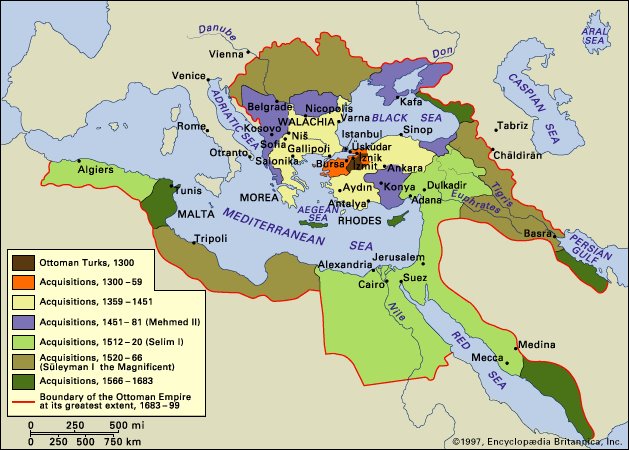
Top Ten Day: My favorite empires

As a history major, I'm a big proponent of the "great man" theory of history - important people having a big impact on history. I mean, let's face it - peasants are pretty much the same throughout history, so although studying them can tell us a lot about how life was like in 13th-century Italy or 20th-century Russia, it can't tell us what the hell was going on, because the peasants were just doing their thing, trying to survive. My kind of history has fallen out of favor as historians focus on the common man more, but to me, it's kind of like the Paris Hilton theory of history - she's famous pretty much because she's alive, not because of any accomplishments. The same holds true for peasants - they are of historical interest simply because they lived, and not because they actually did anything.

Empires are big in "great man" theory of history. Social historians don't care as much about empires, because they contend that it doesn't really matter who's in charge - things will go on as before, and the peasants will suffer. That's kind of my point, but that's not where I'm going with this. I just want to celebrate my favorite empires in history - "favorite" meaning the ones I'm interested in, not necessarily the ones that did the most for human progress. Of course, most rulers of empires aren't interested in human progress. What's an empire? Like irony, I'll know it when I see it. Some call the United States an empire. Sorry, but it doesn't count. But that's just me.

So let's check out some keen empires!

1. The Ottoman Empire, circa 1300-1922. The Ottomans don't get a lot of respect these days, because they were Turks, and everyone knows how horrible the Turks are, right? Ottoman Turkey, however, ruled much of the Middle East for 500 years or so, and the Ottomans contributed quite a bit in terms of military organization and governance. They had some beautiful art, too - a few years ago we went to the Portland Art Museum and saw an exhibit of Ottoman art, which of course drew the ire of the Armenian community in town. The Ottomans brought stability to the Balkans and the Levant, and one of their sultans, Suleiman the Magnificent, might have been the greatest emperor of all time. They almost overran Eastern Europe more than once, which would have completely changed the way history played out and remains a great "what-if" of the world. Yes, the empire became corrupt and frail and was often held together by the European Powers in the nineteenth century because they had their own agendas, but we shouldn't ignore the greatness that was the Ottoman Empire.

The map is from here.

2. The Byzantine Empire, circa 337-1453. This is the Eastern Roman Empire, if you want to be technical, because when Diocletian revamped Rome in the late third century, he split what had become somewhat unwieldy as a single political entity. Then Constantine built Constantinople at what is probably the best place to build a city in the history of mankind (New York might be second-best), and after the West fell, the East became the only Roman Empire, and turned more and more to Greece for their culture and language, hence "Byzantine" after the original Greek settlement on the shores of the Bosporus. The Byzantines are fascinating to me, because their city became the embodiment of empire: as long as Constantinople stood, the empire existed, even at the end, when that's all that was left. I find the emperors wonderful to read about: Justinian and his prostitute-turned-empress wife, Theodora; Heraclius, who finally defeated the Persians only to see his life's work destroyed by a new enemy, the Arabs; Irene, who ruled in 800 when Charlemagne was crowned in the West and may have spurred that decision, because everyone knew a woman couldn't rule an empire; Constantine VII Porphyrogenitus, who wrote a political treatise that gives us lots of information about the tenth century; Basil II, who has one of the best nicknames in history - "Bulgar-Slayer"; and Alexius, John, and Manuel Comnenus, who fought off the Crusaders and helped bring Byzantium its final glory days. Their relations with the West fascinate me, too, as does the Fourth Crusade, when the knights of Europe dared sack the city, earning the enmity of most right-thinking Christians. The final conflict against the Ottomans is interesting, too, as the Byzantines tried to mend fences with Rome against the wishes of their own populace. In a thousand-year history, there's very little that's boring about the Byzantines.

I found the map here, which shows the boundaries of the empire at different times in its history.

3. The Carolingian Empire, 800-843. Yes, it's a short-lived empire, and I suppose I could stretch it out, but the empire was established in 800 and was pretty much destroyed by the Treaty of Verdun in 843. I've written quite a bit about Charlemagne and his empire, so I'll just point out how neat the Carolingian Renaissance is and what a shockingly dynamic ruler Charlemagne really was.

Here is where I found the map.

4. The Roman Empire, 27 B. C.-A. D. 476. The granddaddy of them all! Okay, not really, but the oldest on this list. Rome set the stage for Europe, and as I dig European history, it's not surprising I like this empire so much. Rome is endlessly fascinating, from the early Julio-Claudians and the dominance of the Mediterranean (not to mention their involvement in that Jesus fiasco) to the second-century emperors like Trajan, Hadrian, and Marcus Aurelius to the third-century disasters to the renaissance under Diocletian and Constantine the Great. It's fun to read about the crazy emperors, but part of the interest in Rome is reading about how the fringe cultures and warriors reacted to Rome, from Zenobia in Palmyra to Boudicca in England to the later invasions of Goths and Vandals and whatnot. You could start studying Rome today and do so for the rest of your life and never run out of things to discover. It's quite keen.


5. The Umayyad/Abbasid Empires, 632-750; 758-1258. The early years of Islam are marked by astonishing expansion into northern Africa and east into Persia. This took place under the Umayyads, who were overthrown by the Abbasids in 750. I put the two together because the change in the caliphate was fairly smooth (accompanied by civil war and mass slaughter, to be sure, but once the Abbasids became ascendant, they simply took over). The Umayyads moved to Spain and set up a separate caliphate there, which led to a great flowering of culture on the peninsula. This time is Islam is fascinating, as the Muslims weren't sure what to do with all the possessions they suddenly found themselves with, and toward the end of the period, those tacky Crusaders showed up and upset the china in the Middle East, which unified a somewhat fractured religion against them. The greatest Abbasid caliph was Harun al-Rashid, the contemporary of Charlemagne and the template for the Arabian Nights saga. In 1258 the Mongols obliterated Baghdad and ended the Arab dominance of Islam, setting the stage for the Ottomans to take over the caliphate. It's very interesting to consider that despite Arabic being the official language of Islam and the thing that unites practitioners, there are deep nationalistic rivalries inside the religion, stretching back centuries. Studying Islam from this period helps illuminate what's going on now.

I stole the map from this site.

6. The Angevin Empire, 1154-1216. This ephemeral empire was formed mainly because Henry II of England married well. In 1152, Henry, the duke of Anjou, married Eleanor, duchess of Aquitaine. Eleanor had, two months earlier, divorced Louis VII of France because he was too effete for a man-lovin' woman like Eleanor (okay, who knows why they divorced - my reason is fun!). In 1154, to end England's civil war between King Stephen and Matilda, the daughter of King Henry I, Stephen agreed to name Henry (Matilda's son) as heir. When Stephen died, Henry became king of England. As he held the title of dozens of counties and duchies and whatnot in France and, through Eleanor, more vast land, he became the most powerful ruler in Europe. Hey, that was handy. Henry was the first Platagenet ruler, and with his wife, he had quite the blast, if the history books are to be believed. Of course, he had his best friend killed, but what are you going to do? He also pissed off Eleanor more than once, to the point where she helped her sons rebel against their father, and when Peter O'Toole - I mean, Henry - finally died, Richard and then John ruled after him. Richard, of course, is famous for going on crusade and making nice with Robin Hood in that Disney movie, while John is famous for being a lousy king and losing most of the "empire" that his father had created. It was never an "empire" in the sense of being one administrative state, as each of Henry's possessions had their own culture and governments, but it fun while it lasted!

From here is where I got the map.

7. The Holy Roman/Austrian/Austro-Hungarian Empire, 962-1918. The weirdest empire on this list, the Holy Roman Empire was technically founded by Otto the Great in 962, although ol' Otto tried to link his empire to Charlemagne's as a lot of people did back then. The empire was kept alive through several weak rulers, with only a few rising up to make any impression (Frederick Barbarossa, Frederick II) until the Habsburgs took over in the middle of the 15th century. Under Charles V (1519-1555) the empire reached the height of its power, but from then it declined. After Napoleon put it out of its misery in 1806, it transformed into a Habsburg-run Austrian empire, which became a joint monarchy with Hungary in 1867. It's an interesting empire to study, because it was such a lousy one. The emperor was rarely invested with any power, and unless he had a strong personality, he was helpless against the princes who elected him. Later, after Austria-Hungary became the center of the the empire, it became a baroque monstrosity, the most conservative state in turbulent times. Of course, it was the assassination of the heir to the throne of the empire that sparked the First World War. I have read more than one book that suggests the dismemberment of Austria-Hungary was the worst thing that could have happened for the Balkan nationalities. I don't know if I agree with that theory, but it's certainly something to chew on!


I found the second map here.

8. The German Empire, 1871-1918. I've always been keen on the German Empire, or "second Reich," as a certain Austrian dictator liked to call it. I read a biography of Otto von Bismarck years ago, and it was one of the better history books I've ever read. Plus, Napoleon III's wild ambitions and ruination in 1870-71 (see below) have also fascinated me (as has the Commune, but that's a whole different thing). When I was growing up, I used to read hardcover comics from England that had all kinds of neat stories in them (I lived in Germany, remember). One was about the Commune and how the French tried to get out of Paris during the siege. I guess it hooked me. Bismarck is an intriguing politician, and his relationship with both Wilhelm I and II is very interesting. Germany's escalation of the arms race in the late nineteenth and early twentieth centuries is one of the great tragedies of modern times. It wasn't all Germany's fault, of course, but Wilhelm II was such an odd popinjay that it makes World War I look inevitable. It's a much more interesting state than it gets credit for.

I need to point out that the map came from here.

9. The Second French Empire, 1852-1870. Speaking of the Germans, the emperor that the Germans defeated in the Franco-Prussian War, Napoleon III, ran this empire. He created it and then ran it into the ground. Napoleon, who was the first emperor's nephew, became the president after the 1848 revolution, and then decided to declare himself emperor. Under Napoleon III, France aggressively pursued more colonies in Africa, and Napoleon also tried to establish a client state in Mexico. This, of course, led to the celebration of Cinco de Mayo. Napoleon got in over his head when he declared war on Prussia, leading to utter defeat and his abdication. Napoleon, interestingly enough, was the first president and last monarch of France. The Second Empire is more interesting than the First, because the latter Napoleon was so much more of a schmuck than the original. The fact that he ruled France for 20 years is rather odd.

10. The Japanese Empire. Japan has always been an empire, but I'm keen on the Meiji Restoration era (from 1868) until the war. Japan adopted Western ways, expanded into the Pacific, and beat the snot out of everyone who got in their way. The Japanese did horrible things, especially in China, but the fact that they adapted so quickly to the modern world is very interesting. They wiped out the Russians in 1904, and in the Thirties took over the Pacific. What's most interesting is the way the West attempted to get around their natural racism to explain the rise of Japan. The Japanese war effort is also fascinating, because they could have easily won "their" war without involving the Americans. I like older Japanese history, too, but not as much as this period.

So those are my favorite empires. Empires are awfully swell. Does anyone out there have any favorite empires?

Labels: , ,